
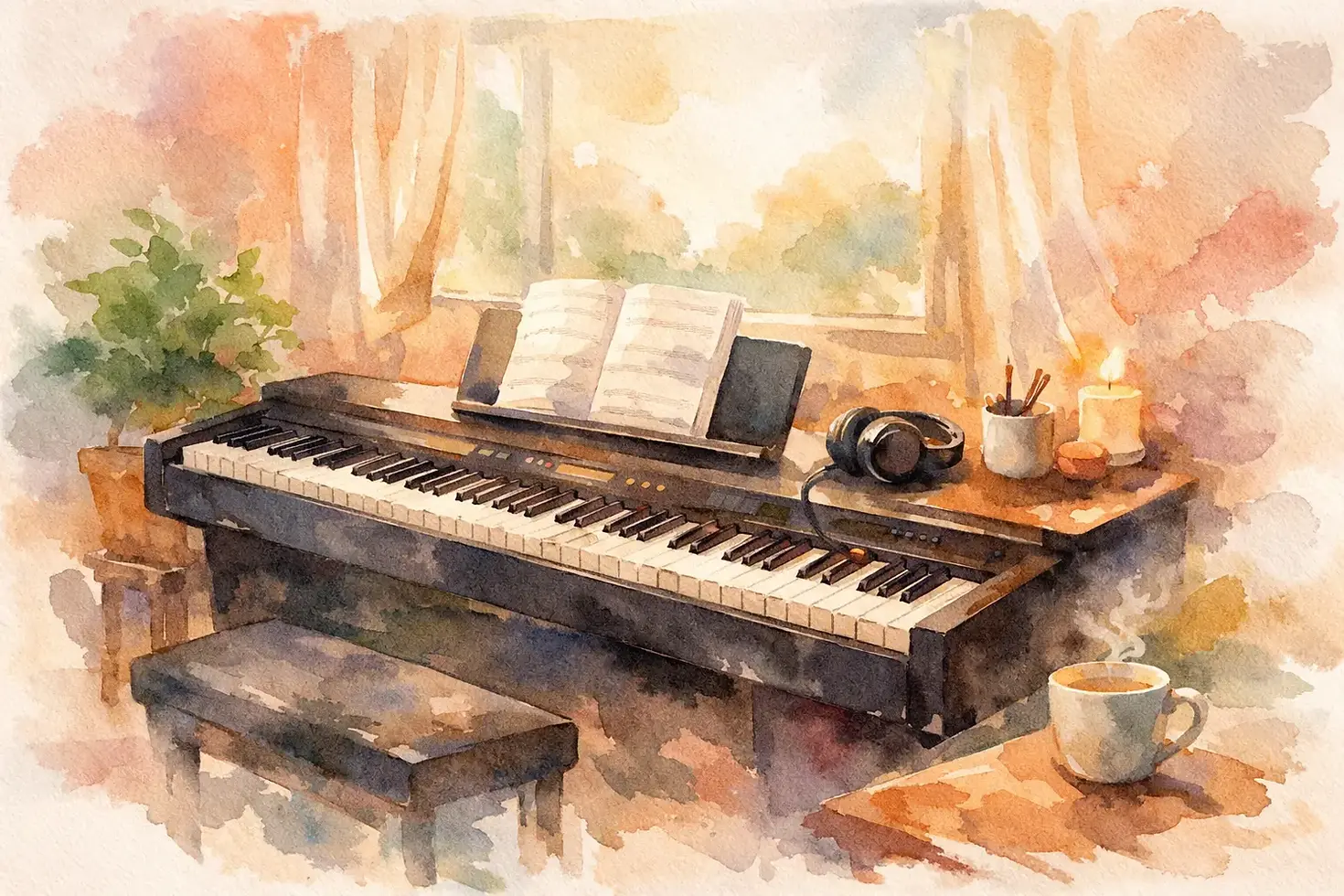
Choosing a Digital Piano for Home Practice
That first practice session at home can go one of two ways. A student sits down, feels comfortable, and wants to keep playing - or the keys feel off, the sound is thin, and practice turns into something everyone has to push through. Choosing the right digital piano for home practice makes a real difference, especially for beginners who are still building confidence and good habits.
For many families, the goal is simple. You want an instrument that supports steady progress, fits your space, and does not create unnecessary frustration. For adult students, the priorities may be a little different - realistic feel, headphone use, and a setup that makes it easy to practice consistently after work or on weekends. Either way, a good home piano should help practice happen more often, not become one more thing to troubleshoot.
What matters most in a digital piano for home practice
The biggest factor is key action. In plain terms, that means how the keys feel under your fingers. If a student is taking piano lessons and practicing on an instrument with light, springy, unweighted keys, the transition to an acoustic piano can be rough. Fingers do not develop the same control, dynamics feel harder to manage, and pieces that seem fine at home may fall apart in lessons or recitals.
For that reason, weighted or fully weighted keys are usually the right place to start. Many entry-level keyboards look appealing because they are smaller and cheaper, but they often leave students needing an upgrade sooner than expected. If the budget allows, choosing a digital piano with 88 weighted keys gives a student a better foundation from the beginning.
Sound quality matters too, though not in the way marketing sometimes suggests. Most new students do not need hundreds of sounds, rhythms, or effects. They need a piano tone that is pleasant and clear enough to encourage careful listening. If the instrument sounds harsh or artificial, students tend to play less musically. A natural piano sound helps students hear phrasing, balance, and dynamics more clearly.
Then there is consistency. A home instrument should turn on quickly, work reliably, and be easy for a child or adult to use without help every time. Complicated menus and too many buttons can become distractions. Simpler is often better.
Touch, tone, and pedals: where quality shows up
When teachers talk about a piano having a good feel, they are usually referring to more than just weight. Better digital pianos respond more like an acoustic instrument. Soft playing feels different from strong playing, and the keys return in a way that supports control. That is important for students working on articulation, balance between hands, and expressive playing.
Pedals are another detail worth noticing. Some lower-cost models come with a small, lightweight pedal that slides around the floor and feels more like a switch than a real piano pedal. That may be acceptable at first, but it is not ideal for students learning proper pedaling technique. A sturdier built-in pedal unit or a high-quality sustain pedal can make practice more realistic.
Speakers also deserve a quick mention. If a piano has weak built-in speakers, even a good sound sample can come across flat. For home use, you do not need concert-level volume, but you do want enough depth that students can hear the shape of what they are playing. Headphones are a great feature for shared households, but the piano should still sound satisfying without them.
How much should you spend?
This is where many families get stuck, and fairly so. There is a big price range between a basic keyboard and a strong beginner-to-intermediate digital piano.
In most cases, the sweet spot for home practice is not the absolute cheapest option. Very low-cost instruments can work for casual experimentation, but if a student is enrolled in lessons and expected to practice regularly, a better instrument is usually the better value over time. It supports technique earlier, reduces the urge to upgrade immediately, and makes daily practice feel more rewarding.
That said, more expensive is not always necessary. A serious young beginner does not need the same piano as an advanced teen preparing major repertoire. An adult returning to piano for enjoyment may care more about sound and cabinet style than about advanced recording features. It depends on the player, the goals, and how long you expect the instrument to serve.
If you are shopping for a child who is just starting, think in terms of the next few years rather than the next few months. If you are shopping for yourself, think about what will make you actually sit down and play regularly. The best purchase is often the one that balances quality with realistic daily use.
Matching the piano to your home
A digital piano for home practice should fit your space and your routine. That sounds obvious, but it is often overlooked.
Some families want a furniture-style cabinet piano that stays in one place and looks polished in a living room or study area. Others need a slimmer portable model on a stand that can work in a bedroom, office, or shared family room. Neither choice is automatically better. The right one depends on how your home functions.
If the instrument is for a younger student, placement matters. A piano tucked into a busy hallway may get little focused use. A piano in a comfortable, well-lit area where a parent can listen in occasionally often leads to more consistent practice. For teens and adults, privacy can matter more, especially if headphone use helps them practice at flexible hours.
You will also want to think about bench height and posture. An excellent instrument paired with the wrong bench setup can still create tension in the hands, shoulders, and back. A stable, adjustable bench is not the most exciting part of the purchase, but it can have a big impact on comfort.
Features that help, and features you can skip
A few features are genuinely useful for home practice. A built-in metronome helps with timing. Headphone jacks are practical for families. Simple recording can be helpful because students hear their playing more clearly when they listen back. Split and duet modes can also be useful in lessons or parent-student practice.
After that, the extras become more optional. Huge sound libraries, auto-accompaniment patterns, and app integrations may be fun, but they are not what make a piano good for learning. Sometimes they help. Sometimes they distract.
For many students, the best home instrument is the one that feels close to an acoustic piano and stays easy to use day after day. Strong fundamentals beat flashy features almost every time.
Common buying mistakes families make
One common mistake is buying based only on price. Another is buying based only on appearance. A sleek cabinet may look beautiful, but if the keys and sound disappoint, the novelty wears off quickly.
A third mistake is assuming any keyboard will do for the first year. That can be true for very casual use, but for structured lessons, starting on a more realistic instrument often saves money and frustration later. Students build technique from the first week, not after they reach some advanced level.
It is also easy to underestimate how motivating a pleasant instrument can be. Students, especially children, respond to comfort. If sitting at the piano feels inviting and the sound is rewarding, practice tends to happen with less resistance.
At Danman's Music School, we see this connection often. Students make the best progress when lesson time and home practice support each other. A thoughtful instrument choice gives that weekly instruction a stronger place to land.
When a starter model is enough
Not every student needs a premium setup right away. If someone is brand new, testing interest, or working within a tighter budget, a solid starter digital piano can still be a smart choice. The key is knowing what corners are safe to cut and which ones are not.
You can usually compromise on extra sounds, furniture styling, or advanced connectivity. It is harder to compromise on weighted 88-key action, dependable tuning stability, and a piano tone that makes practice pleasant. Those core elements affect playing every single day.
If you are between two models, ask a simple question: which one would make this student more likely to practice for the next year? That question tends to lead to better decisions than comparing a long list of technical specs.
The right piano does not need to be perfect. It needs to feel encouraging, reliable, and appropriate for the student using it. When that happens, home practice becomes less of a battle and more of a routine with real momentum. And that is where musical growth usually starts to show.


Comments